Introduction
The ongoing conflict in Gaza dominates global headlines and polarizes public opinion worldwide. As Israel commits – publicly visible – a genocide on the Palestinian Inhabitants of the Gaza Strip and the world community with its shiny institutions like the UN and likewise fail to restrict the atrocities of the Israeli conquest, the art and manner how this conflict is resolved led to a very personal thought process. Especially given the fact that being German is the source of an altered state of consciousness towards the state of Israel and Jews in General since World War II.
Firstly, I wondered: Why do we (as international Community & especially Germans) support Israel so badly and even fail to just address atrocious human rights violations committed in the ongoing conflict? My lawyer brain was asking itself: Aren’t there rules on if, when and how to act in such cases? And, secondly, what about the reasons behind this? What kind of ties we have with the State of Israel? And lastly – seeing the media outrage towards police violence in my homeland – I wondered whether there’s available evidence for German Police acting aggressively or violently towards protesters.
With everything what’s going on I wanted to conduct an own, 100% independent research on the whole thing. Not only for myself, but available for everyone and backed by some academic accuracy. I am a lawyer by profession. I think that my team and I have the means to do so.
I firmly believe anyone in contact with the aforesaid will at some point ask themselves the question how a nation of people being confronted with the shoah and an own genocide not so far away now can just change seats and play the role of the suppressor? This question is beautifully analysed and adressed in The „World after Gaza“ by Pankaj Mishra. In breathtaking detail he investigates how the story of the Jewish people and their nation is connected and even built upon the history of the shoah, leading to the assumption that a nation which claims the worst evil ever to be committed was committed on itself can’t be the simultaneous perpetrator of that very evil.
“The sad truth is that most evil is done by people who never make up their minds to be good or evil.”
Hannah Arendt, The Life of the Mind
This article aims to provide a balanced and fact-based overview of the historical context. It is conducted by a lawyer and three research assistants, carefully reviewing online accessible evidence and legal expertise. It examines the legal implications and current debates surrounding the conflict. We will explore the historical roots of the Israel-Palestine dispute. We will also examine the legal status of Palestine and the allegations of genocide in Gaza. Additionally, we will look into Germany’s role in arms exports. Lastly, we will discuss the issue of police violence in Germany during pro-Palestinian demonstrations.
The Full Research is available in German for Download at the end of the Website
The History of the Palestine Region

The region known as Palestine has a complex and layered history. Located roughly between the Jordan Rift Valley and the Mediterranean Sea, it has been home to numerous civilizations, including the Israelites, Assyrians, Babylonians, Persians, Romans, Byzantines, and Ottoman Turks. The Jewish diaspora began in earnest after the Roman conquest, but Jewish communities maintained a presence in the region. By the 19th century, under Ottoman rule, Jewish immigration increased, especially as antisemitism in Europe intensified.
After World War I, the British Mandate for Palestine was established, setting the stage for modern conflicts. The Balfour Declaration of 1917 promised a „national home for the Jewish people“ in Palestine, but conflicting promises to Arab leaders created lasting tensions. The United Nations‘ 1947 partition plan, which proposed dividing Palestine into Jewish and Arab states, was accepted by Jewish leaders but rejected by Arab states, leading to the 1948 Arab-Israeli War and the establishment of the State of Israel.
The Legal Status of Palestine
Statehood Criteria
Under international law, a state must have a permanent population, a defined territory, and an effective government. While Palestine meets the first two criteria, the question of effective governance remains contentious. However, international law does explicitly not require all criteria to be fully met for state recognition. Recognition is possible, provided that it does not violate the rights of another state. The Israeli occupation of the West Bank is widely considered illegal under international law, which means it does not legally prevent the recognition of Palestine.
Recognition of Palestine
Since the Palestine Liberation Organization (PLO) declared the State of Palestine in 1988, 147 countries—including Spain, Ireland, and Norway—have recognized Palestine as a sovereign state. In 2012, the United Nations granted Palestine non-member observer state status, further solidifying its international standing. Just recently the United Kingdom has recognized a Palestinian state. Germany still did not recognise Palestine until today.
The Gaza Conflict: Assessing Allegations of Genocide

Legal Framework
The UN Genocide Convention defines genocide as acts committed with the intent to destroy, in whole or in part, a national, ethnic, racial, or religious group. Key acts include:
- Killing members of the group
- Deliberately inflicting conditions of life calculated to bring about physical destruction
Evidence and Arguments
- Mass Casualties: Reports indicate that a significant majority of casualties in Gaza are civilians, raising concerns about indiscriminate use of force. 66.000 – 335.000 Casualties are reported.
- Blockade and Humanitarian Crisis: Israel’s blockade has led to severe food and medical shortages, with organizations like Amnesty International accusing Israel of using starvation as a weapon.
- Intent: Proving genocidal intent is challenging, but statements by Israeli officials—such as calls for the total destruction of Gaza and dehumanizing rhetoric—have been cited as evidence of intent by groups like the International Association of Genocide Scholars (IAGS).
Self-Defense vs. Proportionality
Israel argues that its military actions are acts of self-defense following the October 7, 2023, Hamas attack. However, critics argue that the scale of Israel’s response—particularly the high civilian death toll—violates the principle of proportionality under international law.
Conclusion on Genocide Allegations
While a definitive legal ruling is pending, the accumulation of evidence—including civilian casualties, blockade conditions, and inflammatory statements—suggests a plausible case for genocide. The international community must act on the basis of sufficient probability rather than looking for absolute proof which seems a slap in the face of the lives of the already extinguished people there – and the toll rises daily given the ongoing humanitarian crisis and the killing spree of the IDF.
Germany’s Role: Reparations, Arms Exports, and Legal Obligations
Historical Reparations
Germany has paid over €82 billion in reparations to Israel since the 1952 Luxembourg Agreement, reflecting its historical responsibility for the Holocaust. Germany remains one of Israel’s most important economic partners, with trade volume reaching \$8.94 billion in 2022.
Arms Exports to Israel
Germany’s arms export policy is governed by strict legal frameworks, including the Kriegswaffenkontrollgesetz (War Weapons Control Act) and EU Common Position on Arms Exports. Exports require approval from the National Security Council, which shall consider human rights, regional stability, and international relations.
- Recent Trends: Germany approved €12.13 million in arms exports to Israel in the first half of 2024, a small fraction of its total arms trade.
- Criticism: Despite strict regulations, Germany has faced criticism for exporting arms to authoritarian regimes and conflict zones. The lack of transparency in the National Security Council’s decisions raises concerns about accountability.
Legal and Ethical Dilemmas
Germany’s legal obligations under the Arms Trade Treaty and EU Common Position require it to avoid exports that could fuel human rights abuses. The ongoing conflict in Gaza has intensified scrutiny of Germany’s arms trade, particularly given its historical ties to Israel.
But German ties with Israel due to arms deals are a two sided road, as the recently published article „The Other Side of Trade“ on the well-known verfassungsblog.de shows.
Politic and Legal Considerations regarding German Arms Imports from Israel and Exports to are carefully reviewed and analysed, leading to the sentiment that as long as both countries remain interdependent on each other for issues of defence it is increasingly hard for Germany to adress the violation of human rights without jeopardising it’s own defence abilities.
Police Violence in Germany: The Case of Kitty O’Brien
Background
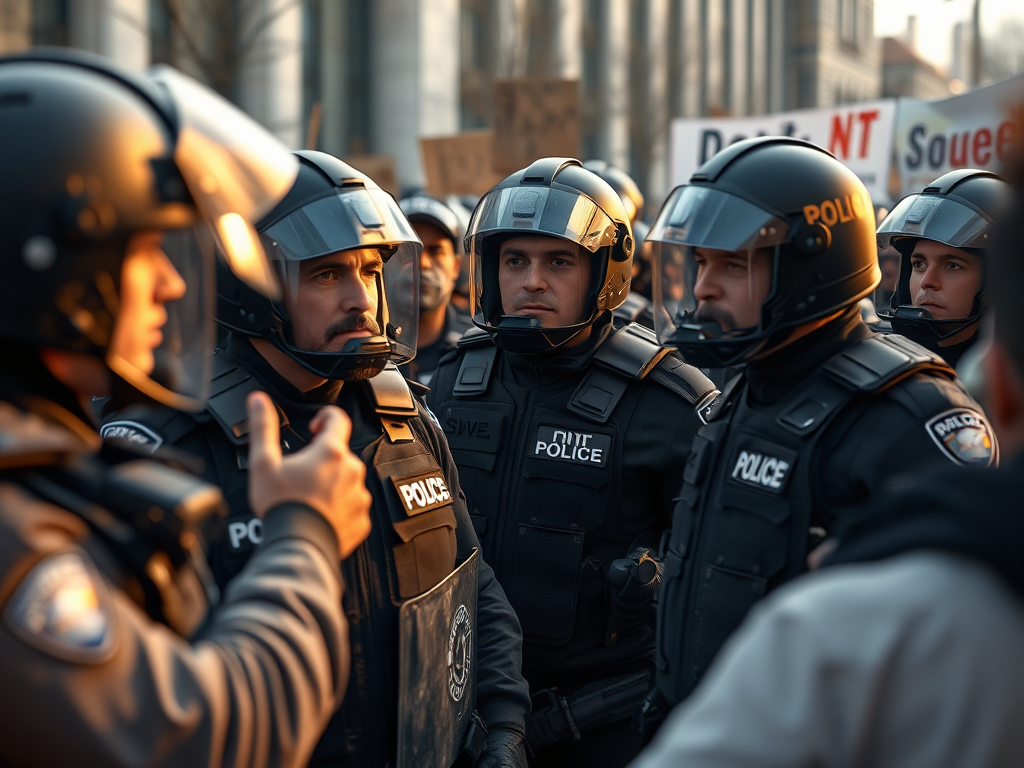
On August 28, 2025, Irish activist Kitty O’Brien was violently assaulted by a police officer during a pro-Palestinian demonstration in Berlin. The incident, captured on video, shows O’Brien being punched in the face and dragged away, resulting in a broken arm and facial injuries.
Legal Analysis
- Freedom of Assembly: Under Article 8 of the German Constitution (Grundgesetz), peaceful assemblies are protected. However, police can intervene if there is a concrete threat to public safety.
- Proportionality: The officer’s use of force has been widely criticized as disproportionate. O’Brien’s verbal provocations did not justify physical violence, and less intrusive measures—such as a warning or removal from the scene—should have been prioritized.
- Potential Charges: The officer could face charges of assault in office (Körperverletzung im Amt, § 340 StGB), as his actions exceeded necessary and proportional force.
The case has led to various criminal complaints and even caused the Irish Department of foreign affairs to take action. Until today, the case is not resolved. Under usual circumstances the accusations of assault in office (which are perfectly caught on camera) are exposed to a criminal trial in the future.
Broader Implications
The case highlights tensions between police authority and civil liberties, particularly in the context of politically charged demonstrations. It underscores the need for better training in de-escalation and transparency in police conduct. The more subtle effects are a decreased respect for police work in general, as blunt unnecessary violence towards protesters by police officers further flaws the image of the noble policemen defending and protecting society.
Personal Reflection: The Failure of International Law
The Gaza conflict in general is a tragic example of how war undermines legal and moral norms – not only where it’s actually happening, but everywhere we as humans have to deal with it.
Despite international laws designed to prevent genocide and protect civilians, political interests and historical grievances continue to fuel violence. The failure to achieve a two-state solution has perpetuated suffering on both sides, demonstrating the limitations of legal frameworks in resolving deeply entrenched conflicts.
Conclusion and Call to Action
The international community must:
- Demand accountability for potential war crimes and human rights violations.
- Push for a ceasefire and renewed peace negotiations.
- Reevaluate arms export policies to ensure they do not contribute to humanitarian crises.
- Support independent investigations into allegations of genocide and police misconduct.
The Gaza conflict is not just a regional issue—it is a test of global commitment to justice, human rights, and the rule of law.
What are your thoughts? Should the international community intervene more decisively in the Gaza conflict? How can legal frameworks be strengthened to prevent future atrocities? Share your views in the comments below.
Links
- Balfour Declaration (1917)
- UN Genocide Convention
- Amnesty International Report on Gaza
- International Association of Genocide Scholars (IAGS) Resolution
- German Arms Export Report 2024
- The Guardian: Berlin Police Violence
 The Primary Constraint
Hinterlasse einen Kommentar